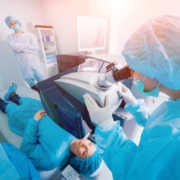
Patient and doctor getting ready for a laser eye procedure to enhance vision.

What Makes Allegretto Wave® LASIK Different From Standard LASIK?

LASIK has evolved significantly over the years, and newer laser platforms can make treatment more customized to the individual eye. Allegretto Wave® LASIK is one example, using advanced wavefront-guided technology to refine how the cornea is reshaped and how vision is corrected.

Jeffrey Maehara, MD, has a long history of adopting advanced eye care technology in Hawaii, including several first-in-state procedures and lens technologies. That focus on newer treatment options is especially relevant for patients comparing Allegretto Wave® LASIK with more traditional LASIK approaches.

How Does Allegretto Wave® LASIK Work?

Like standard LASIK, Allegretto Wave® LASIK reshapes the cornea so light can focus more accurately on the retina. The difference is in how the laser plans and delivers that correction.

The Allegretto Wave® system uses detailed eye measurements to guide treatment. This allows the laser to account for more than a basic glasses prescription and may help create a more individualized correction pattern.

What Makes It Different From Standard LASIK?

Traditional LASIK can provide excellent vision correction, but newer platforms are designed to make treatment even more precise.

Potential differences with Allegretto Wave® LASIK include:

  • Wavefront-guided treatment planning
  • More customized corneal reshaping
  • Eye-tracking technology during treatment
  • Attention to preserving natural corneal shape
  • Treatment of nearsightedness, farsightedness, and astigmatism

These features support consistent visual outcomes while tailoring treatment more closely to each eye.

Can Allegretto Wave® LASIK Improve Night Vision?

Some patients considering LASIK are concerned about glare, halos, or difficulty seeing at night after surgery. Wavefront-guided technology is designed to address subtle optical imperfections that may influence visual quality.

Results still vary from person to person, and no LASIK system can guarantee freedom from nighttime visual symptoms. Pupil size, prescription strength, corneal shape, tear film quality, and other factors can all influence the final result.

Who May Be a Candidate?

Candidacy depends on much more than age or prescription alone. A comprehensive LASIK evaluation typically considers:

  • Prescription stability
  • Corneal thickness and shape
  • Overall eye health
  • Dry eye symptoms
  • Lifestyle and visual goals

Patients with certain corneal conditions or unstable prescriptions may be better suited for another form of vision correction.

Explore Allegretto Wave® LASIK in Honolulu, HI

Choosing LASIK technology is only one part of planning vision correction. Corneal health, the accuracy of preoperative measurements, and the treatment plan all matter when determining whether Allegretto Wave® LASIK is appropriate. 

Dr. Jeffrey Maehara can evaluate these factors and discuss which LASIK approach may best fit your vision needs. Call 808-955-3937 to schedule a LASIK consultation in Honolulu, HI.
Older woman having her eyes examined to determine how presbyopia might affect her LASIK treatment.

LASIK After 40: What Presbyopia Means for Your Results

LASIK can provide clearer distance vision well into your 40s and beyond, but age-related changes in near vision can affect what you should expect from the procedure. Presbyopia typically becomes noticeable around age 40, when reading small print or focusing on a phone at close range starts getting harder.

Jeffrey Maehara, MD, studied under leading LASIK and refractive surgeons while attending Tulane Medical School and has extensive experience with refractive procedures. For adults considering LASIK in Honolulu, knowing how presbyopia fits into the picture can help set realistic goals before surgery.

What Is Presbyopia?

Presbyopia is a normal change that occurs as the eye’s natural lens becomes less flexible with age. When the lens cannot adjust as easily, focusing on nearby objects becomes more difficult.

Common signs include:

  • Holding reading material farther away
  • Needing brighter light to read
  • Blurry vision at close distances
  • Eye strain during near work
  • Switching between glasses for different distances

Presbyopia is separate from nearsightedness, farsightedness, and astigmatism.

Does LASIK Fix Presbyopia?

Traditional LASIK reshapes the cornea to correct refractive errors such as nearsightedness, farsightedness, and astigmatism. It does not stop the natural aging process that causes presbyopia.

Someone who receives LASIK for excellent distance vision after age 40 may therefore still need reading glasses for close-up tasks. Patients who already notice difficulty reading should discuss this possibility before deciding on treatment.

Can LASIK Reduce the Need for Reading Glasses?

For some patients, monovision LASIK may be an option. This approach typically corrects one eye primarily for distance and leaves the other slightly nearsighted for closer tasks.

Because the brain must adapt to using the eyes differently, monovision is not comfortable for everyone. A temporary contact lens trial may help determine whether this approach feels natural before considering a permanent correction.

Age, prescription, corneal health, daily visual demands, and personal preferences can all influence whether traditional LASIK or monovision may be appropriate.

Planning LASIK After 40 in Honolulu, HI

Turning 40 does not automatically rule out LASIK, but it does make near-vision expectations an important part of treatment planning. A detailed eye evaluation can determine whether your eyes are healthy enough for surgery and how presbyopia may affect your desired correction. 

Dr. Jeffrey Maehara can discuss available options based on each patient’s prescription and visual priorities. Call 808-955-3937 to schedule a LASIK consultation in Honolulu, HI.
Patient in an eye surgery operating room being prepared for their PRK vision correction procedure.

Why Some Patients Are Better Candidates For PRK Than LASIK

If you have been researching laser vision correction, LASIK is often the first option that comes up. While LASIK is widely performed and effective, it is not the right choice for every set of eyes, and many patients are surprised to learn that PRK may be the better option based on eye health, lifestyle, or long-term safety considerations.

At Maehara Eye Surgery & Laser, advanced care is led by Dr. Jeffrey Maehara, a board-certified ophthalmologist and fellowship-trained anterior segment and glaucoma specialist who also practices preventive and integrative medicine. Knowing whether PRK or LASIK is the better fit starts with recognizing how the procedures differ and why certain patients are better suited for PRK.

PRK Vs LASIK: What Actually Makes Them Different

PRK and LASIK both use advanced laser technology to reshape the cornea and correct vision. The key difference is how the eye is prepared before the laser is applied. LASIK involves creating a thin flap in the cornea, while PRK gently removes the surface layer of the cornea and allows it to heal naturally afterward.

Because PRK does not rely on a corneal flap, it can be a safer and more flexible option for certain patients.

Why PRK May Be The Better Option For Some Eyes

PRK candidates are often people who have been told they are not ideal LASIK candidates or who want a procedure that better fits their lifestyle. PRK is commonly recommended for patients who have:

  • Thinner corneas that make flap creation less safe
  • Mild to moderate dry eye symptoms
  • Active or physically demanding lifestyles
  • Jobs or hobbies with a higher risk of eye impact
  • Unique corneal surface characteristics

For patients in Honolulu, where surfing, swimming, hiking, and outdoor activities are part of everyday life, PRK can provide added confidence and long-term stability.

Recovery Expectations Without The Stress

One of the biggest concerns patients have when comparing PRK vs LASIK is recovery time. PRK does require a longer initial healing period, with vision sharpening gradually rather than immediately. While that sounds intimidating, most patients find the process very manageable with proper care and realistic expectations.

Modern techniques and medications have made PRK recovery far more comfortable than many people expect, and the long-term results are just as clear and reliable as LASIK.

Long-Term Results That Stand The Test Of Time

Because PRK does not require a corneal flap, it has a strong history of safety and avoids flap-related risks in the future. This makes PRK especially appealing for patients who value durability and long-term eye health.

For many PRK candidates, the tradeoff of a slower recovery is balanced by peace of mind and lasting results.

Vision Correction in Honolulu, HI

Choosing between PRK and LASIK does not have to feel complicated. If you are exploring PRK candidates in Honolulu, scheduling a consultation with Maehara Eye Surgery & Laser is the next step toward clearer, more comfortable vision. Call 808-955-3937 to get started.

Room-wide image of a patient having LASIK eye surgery performed by her ophthalmologist.

Is IntraLase™ FS the Best Option for Your LASIK Surgery?

LASIK surgery has transformed vision care by offering a long-lasting solution for nearsightedness, farsightedness, and astigmatism. One of the most advanced LASIK technologies is IntraLase™ FS, a bladeless method for creating the corneal flap. 

At Maehara Eye Surgery & Laser, Dr. Dennis Maehara, who founded the clinic over 30 years ago, and his son, Dr. Jeffrey Maehara, a board-certified ophthalmologist and fellowship-trained Anterior Segment-Glaucoma Specialist, provide expert care. Dr. Jeffrey Maehara’s advanced training in preventive and integrative medicine ensures that patients receive the most effective and personalized LASIK options, including IntraLase. But is this bladeless technology the best choice for your LASIK surgery?

What is IntraLase™ FS?

IntraLase FS is a revolutionary technology used in LASIK procedures to create a corneal flap with a laser instead of the traditional blade. This method is more precise and offers several advantages over older techniques. The laser is incredibly accurate, leading to a more customized procedure and potentially better visual outcomes.

The Benefits of IntraLase for LASIK Surgery

IntraLase FS is often the preferred choice for those seeking LASIK surgery because of its precision and safety. Some key benefits include:

  • Precision: The laser creates a more accurate corneal flap, tailored to each patient’s unique eye shape, which can improve the overall results.
  • Safety: Because there’s no blade involved, the risk of complications is significantly reduced.
  • Faster Recovery: IntraLase’s precision helps reduce the risk of complications like flap dislocation, leading to a quicker recovery time.
  • Improved Results: Studies show that patients who undergo LASIK with IntraLase FS often achieve better visual outcomes compared to those using traditional methods.

Who Can Benefit from IntraLase?

IntraLase FS can be especially beneficial for individuals who may not be ideal candidates for traditional LASIK due to specific eye characteristics. For example:

  • Those with thin corneas who need extra precision to ensure a safe and effective flap creation
  • People with higher prescriptions who require more accuracy for optimal results
  • Patients with irregular corneal shapes who may benefit from the customized, bladeless approach of IntraLase

IntraLase provides a solution for a wider range of patients, offering greater precision and safety. Its ability to cater to various eye conditions makes it a highly versatile option for LASIK candidates, providing a more tailored approach to vision correction. If you’re concerned about whether your eyes are suitable for LASIK, IntraLase could be the key to achieving the best possible outcome.

Explore the Benefits of IntraLase LASIK in Honolulu, HI

If you’re considering LASIK surgery and want to know if IntraLase is the best option for you, the first step is scheduling a consultation with an experienced professional. 

The team at Maehara Eye Surgery & Laser in Honolulu is committed to providing personalized guidance through every stage of your LASIK experience, helping you choose the right option for your vision. Call us today at 808-955-3937 to schedule your consultation and take the first step toward clearer, more comfortable vision.

Close up of a woman's eye with a laser being used to perform LASIK eye surgery on her

Bladeless LASIK vs. Traditional LASIK: What’s the Difference?

Many people turn to LASIK as a dependable way to sharpen their vision and move away from glasses or contact lenses. At Maehara Eye Surgery & Laser, patients benefit from over 30 years of experience led by Dr. Dennis Maehara and his son, Dr. Jeffrey Maehara, a board-certified ophthalmologist and fellowship-trained anterior segment and glaucoma specialist. Dr. Jeffrey Maehara also brings expertise in preventive and integrative medicine. 

As technology has advanced, bladeless LASIK has become a more precise and comfortable alternative to traditional methods. Learning how these options compare can guide you toward the best choice for your vision.

What is Traditional LASIK?

Traditional LASIK uses a small mechanical blade, called a microkeratome, to create a flap in the cornea. This flap is lifted so the surgeon can reshape the underlying corneal tissue with a laser, correcting common vision problems like nearsightedness, farsightedness, and astigmatism.

While effective, the blade introduces more variation and may increase the risk of certain complications or prolong recovery time for some patients.

What is Bladeless LASIK?

Bladeless LASIK, or all-laser LASIK, replaces the blade with a femtosecond laser to create the corneal flap. At Maehara Eye Surgery & Laser in Honolulu, we use the advanced IntraLase™ FS laser in combination with the Allegretto Wave® laser system to deliver outstanding precision and speed.

This combination offers key benefits:

  • Greater safety through bladeless precision
  • Customization based on your unique eye structure
  • Faster healing and improved comfort
  • More consistent outcomes with reduced flap-related risks

Comparing the Two Techniques

Both traditional and bladeless LASIK offer excellent results, but there are some key differences:

  • Technology used: Traditional relies on a blade; bladeless uses lasers exclusively
  • Precision: Bladeless offers more consistent flap creation
  • Comfort: Patients often report greater comfort with bladeless procedures
  • Recovery: Bladeless LASIK may offer faster visual recovery for some patients

Is Bladeless LASIK Right for You?

If you are considering laser LASIK and want the most advanced technology available, bladeless LASIK may be the ideal solution. This method offers a gentler and more precise experience, which can be reassuring if you are uneasy about the use of a blade. Along with greater comfort, bladeless LASIK often provides improved accuracy and faster recovery.

At Maehara Eye Surgery & Laser, excellent outcomes begin with a careful and personalized evaluation. Every LASIK candidate receives a thorough screening to determine if the procedure suits their vision needs. Safety is always our highest priority.

We also understand the importance of value. Our pricing is highly competitive, and we provide physician-only care. From consultation to post-operative visits, Dr. Maehara handles each stage of your treatment, ensuring consistent and expert care.

Setting the Standard for LASIK in Honolulu, HI

If you are considering laser LASIK and want a safe, effective, bladeless option, we invite you to schedule a consultation. Discover how Maehara Eye Surgery & Laser in Honolulu, HI, can help you achieve clearer vision with advanced care you can trust at 808-955-3937.

Beautiful female eye in scanning circle closeup and eyechart.

What you should know about LASIK

If you have been considering LASIK surgery to help reduce or remove the need for wearing glasses or contacts, there are several things you should know. Read on for eight things you should know about LASIK.

  1. Your eyes must be healthy to undergo LASIK surgery. If you have severe dry eye syndrome, conjunctivitis or pink eye, or any type of eye injury where you are still recovering, you will need to wait until those conditions are resolved before you can undergo LASIK.
  2. If you have cataracts or uncontrolled glaucoma, you may not be a candidate for LASIK.
  3. You must be in good health to be considered for LASIK. Uncontrolled degenerative conditions or autoimmune diseases may prevent you from having LASIK done. Certain medications may also interfere with post-operative healing and contribute to dry eye syndrome. You will want to share your complete list of medications and vitamins and supplements with your doctor during your consultation.
  4. Your corneas cannot be too thin. LASIK works by reshaping the front surface of the eye known as the cornea. The cornea must have enough tissue thickness in order for you to have surgery. Other surgical options may be better suited for you.
  5. You must be at least 18 or older to have LASIK. When you are a teenager, and even a young adult, your eyes continue to change.
  6. If you have a prescription, it’s important that your prescription is stable for at least a year before you are able to proceed with LASIK.
  7. Women who are pregnant or nursing are not good candidates for LASIK as hormonal changes can alter the shape of the cornea. You will want to wait until a few months after you have finished nursing before getting LASIK done.
  8. It’s important to have a positive frame of mind and realistic expectations for the outcome of surgery. Be sure to discuss all potential risks and possible side effects before you decide to undergo LASIK surgery.

To learn whether you are a candidate for LASIK, call 808.955.3937 for a consultation.

Give the Valentine’s Day Gift of the Century With LASIK

LASIK Surgery honolulu, HILet’s face it, with Valentine’s Day just around the corner you don’t want to end up in the dog house by gifting your significant other with a gift that is less than personal. Although jewelry, large teddy bears, flowers, and chocolates are favorites amongst many individuals, they aren’t exactly personal. Give your love a gift that will keep on giving not just throughout the year but for the rest of their life by gifting them with LASIK Surgery. If your significant other has a hard time seeing either near or far and they are always complaining about their bad vision, nothing will make them happier than restoring their eyesight. Read on to learn more about LASIK Surgery.

What Is LASIK Surgery?

Unlike traditional LASIK surgery, Dr. Jeffrey Maehara performs bladeless LASIK Surgery which is a faster and equally as effective surgical procedure. With traditional LASIK Surgery, a small blade is used to help shave off and reshape the cornea. However, with bladeless LASIK surgery, a variety of lasers will be used to do the same thing— which means less time and a lower chance of error.

What Are the Results Like?

The best part about LASIK eye surgery is the fact that your loved one’s vision will be restored to perfection after recovering from the actual surgery itself. And who doesn’t want to have perfect vision?

How Can It Be a Surprise?

Because we can’t perform bladeless LASIK surgery without conducting a consultation beforehand, you aren’t going to be able to fully surprise your loved one on Valentine’s Day. You can, however, schedule their consultation appointment for Valentine’s Day so that we can get the ball rolling sooner than later.

Get the biggest hug and kiss from your Valentine this year and give them a gift that they will never forget: LASIK eye surgery. If you would like to learn more about this procedure or other eye procedures, contact Dr. Jeffrey Maehara today and schedule a consultation appointment.